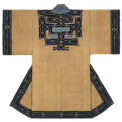
Anatomy of an object: Ainu attush robe
Here we reveal an exemplary Ainu ceremonial garment from Hokkaido


Here we reveal an exemplary Ainu ceremonial garment from Hokkaido
For more than forty years HALI has found and published some of the most important and beautiful rugs and textiles in the world. The many different paths we have followed to find interesting pieces—auctions, collector meetings and conferences, dealers’ exhibitions and adverts—have been a constant source of wonder and excitement in our pages. Illustrating gems we have discovered and wanted to share has tended to be confined to an appropriate context. Here we are attempting something different.

Nazmiyal Auctions is set to sell 113 lots of antique and vintage carpets on Thursday 18 June 2020.
For more than forty years HALI has found and published some of the most important and beautiful rugs and textiles in the world. The many different paths we have followed to find interesting pieces—auctions, collector meetings and conferences, dealers’ exhibitions and adverts—have been a constant source of wonder and excitement in our pages. Illustrating gems we have discovered and wanted to share has tended to be confined to an appropriate context. Here we are attempting something different.
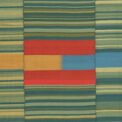
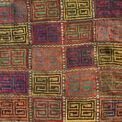
Werner Weber’s kilims from Mazandaran Province in the north of Iran are currently on show at the Historical and Ethnological Museum in St. Gallen, Switzerland, until 30 January 2021.
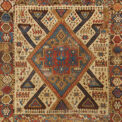
For more than forty years HALI has found and published some of the most important and beautiful rugs and textiles in the world. The many different paths we have followed to find interesting pieces—auctions, collector meetings and conferences, dealers’ exhibitions and adverts—have been a constant source of wonder and excitement in our pages. Illustrating gems we have discovered and wanted to share has tended to be confined to an appropriate context. Here we are attempting something different.
In HALI 201, we looked at tie-dye and other ‘shaped-resist’ textiles, which are culturally ubiquitous.
More than ever are we reminded of the interconnected nature of our world. In his editorial for HALI: The India Edition, Ben Evans muses on how this fact and its historical significance can be understood through the lens of Indian textiles.
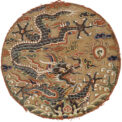
In the regular HALI feature Thread of time, we connect two seemingly very different textiles through material, technique, iconography or use. In the two tapestry-woven textiles of this article, the link is the peacock.
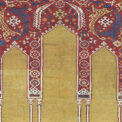
Contributing editor Alberto Boralevi reflects on a rare yellow-ground early ‘Transylvanian’ west Anatolian Ottoman niche rug.