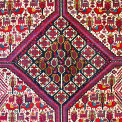
Anatomy of an Object: A Baharlu/Ainalu Carpet
Although unsigned, this grand Khamseh Confederacy carpet, of unusually large size and great artistic merit, was likely made for a tribal khan by a weaver of the Baharlu or Ainalu tribes.


Although unsigned, this grand Khamseh Confederacy carpet, of unusually large size and great artistic merit, was likely made for a tribal khan by a weaver of the Baharlu or Ainalu tribes.
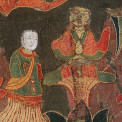
A special exhibition commemorating the completion of conservation work ‘Threads of Devotion, National Treasure: The Taima Mandala Tapestry and Embroidered Buddhist Imagery’ opened at the Nara National Museum on 14 July and will be on show until 26 August 2018.
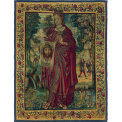
‘Relative Values: The Cost of Art in the Northern Renaissance’ currently showing at The Met uses the currency of cows to illustrate the expense of tapestries at the time of their manufacture. Rachel Meek discusses the exhibition’s concept and sole tapestry with curator Elizabeth Cleland.
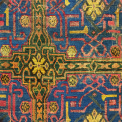
Spanish carpets and Spanish ceilings: John Mills weaves together the strands of a story prompted by the reappearance at an auction of a fragment of a late 15th-century Mudéjar carpet
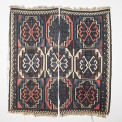
A striking kilim recently offered by Istanbul dealer Şeref Özen is typical of 19th-century flatweaves from the mountainous region of Tusheti in northeast Georgia. Rachel Meek investigates.
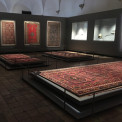
Christie’s Louise Broadhurst views spectacular carpets and textiles at an exhibition in Urbino.
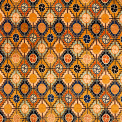
A structural uniformity is disguised by apparent randomness caused by the extensive colour range used in the field of this classical carpet in the Beijing Palace Museum
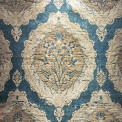
Christie’s Louise Broadhurst spots spectacular carpets and textiles at an exhibition in Florence.
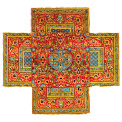
A historian by profession, Professor Marco Spallanzani has made a name for himself in carpet circles through his detailed and illuminating scholarly research in Italian archives and historic inventories.
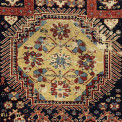
From HALI 195: Ralph Kaffel focuses on a Caucasian prayer rug with the ‘Boteh Khila’ design